
I. Introduction
The guns of World War Two had just fallen
silent when the world made the promise to “save succeeding generations from the
scourge of war”(United Nations, 1945). With this declaration, the most
recognizable peacekeeping organization in history, the United Nations, was
formed. However, the ink on the UN Charter had not even dried when the world
found itself at war again. Until today, peace has largely remained elusive, leading
many to doubt the UN’s ability to effectively protect the safety and welfare of
people worldwide. Looking at the UN’s peacekeeping history, these doubts may
prove to be true.
In its early years, UN peacekeeping largely
focused on overseeing decolonization, ceasefire agreements, and inter-state
conflicts. During this period,
combatants were usually part of a state’s uniformed services, and were easier
to pacify when ceasefire agreements were arranged. The 1990s ushered a
new era of intra-state conflicts involving civil wars, state collapse, ethnic rivalries,
and rampant human rights violations. Belligerents were now harder to identify
and police due to the involvement of militias, extremist ethnic groups,
paramilitary organizations and other non-state actors. Operations also involved
considerable political and economic rehabilitation, as well as demobilization of militants.
This shift in conflict dynamics exposed several
deeply rooted problems within the UN’s peacekeeping system (Ghoniem, 2003). Not
only were intra-state conflicts more difficult to deal with on the ground, but
the international politics surrounding them were no less complicated matters. The
difficulties for UN peacekeeping generated by these problems were most evident during
the mid-1990s.
II.
The Rwandan Genocide and The UN’s Response

In 1994, long standing ethnic tensions between the Hutus and Tutsis in Rwanda boiled over after the assassination of the country’s president. This led to the mobilization of the Hutu-dominated military, two key Hutu militias (the Interahamwe and Impuzamugambi), and even civilians to start the systematic mass killing of Tutsis and Hutu moderates. In a span of 3 months, approximately 800,000people were killed and millions more displaced from their homes in what has been described as “the most efficient genocide of the 20thcentury” (Heidon, 2005).The killings only ceased when the Rebel Tutsi Army (Rwandan Patriotic Front or RPF) was able to reclaim the capital and drive the military and militia to the jungles of Zaire. This last-ditch effort though was already too late to prevent atrocities.
The Rwandan Civil War had already prompted
the UN to establish a presence in the region even before the genocide. Back
then, the UN Assistance mission for Rwanda or UNAMIR largely focused on
maintaining the Arusha Accords, a peace agreement between the Hutu-dominated
government and RPF. It was also tasked with monitoring humanitarian operations
and security situation leading up to the planned elections. When the
mass killings started occurring, UNAMIR gained notoriety for its inability to
actively assert itself in the conflict and defend civilians. Closer analysis of
UNAMIR’s situation reveals the reasons behind this.
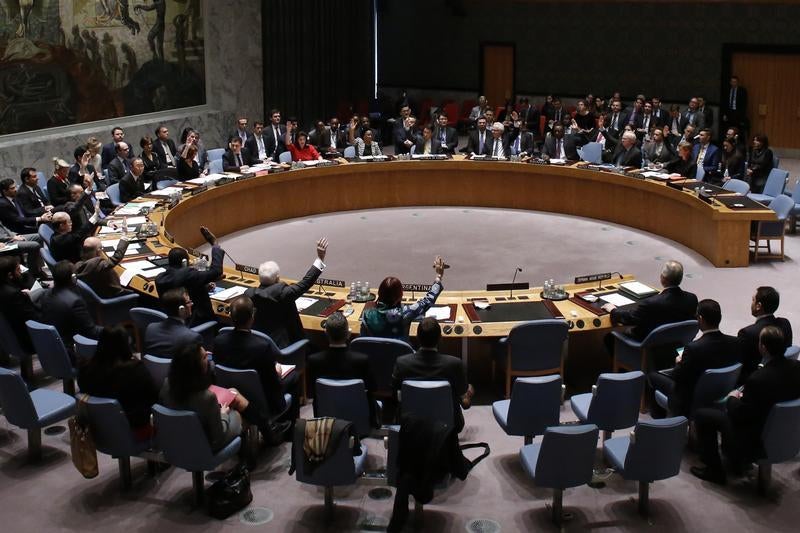
The Security Council was indecisive and divided over the
issue. The Security Council spent a great deal of
time debating whether or not the killings were extensive enough to be officially
classified as ‘genocide’. This was because the use of the term would
automatically entail new responsibilities and a number of key states were
unwilling to commit. The United States and France, for example, were reluctant
to reinforce the small UN peacekeeping presence already in Rwanda(Carlsson, Han
& Kupolati, 1999). When the Security Council did authorize action through
UNAMIR, it was still undecided on whether UN troops in Rwanda should be allowed
to use armed force to defend civilians. The US and UK, in particular, demanded
more information about the severity of the situation in Rwanda before any
directive would be given (Carlsson, Han & Kupolati, 1999).

The mission suffered from lack of personnel and resources. UNAMIR did not have enough troops to fulfill its mission properly. There were only around 2000+peacekeepers for the entire country while the genocide was occurring. Many of these peacekeepers, particularly, the Belgian contingent, were pulled out when violence in Rwanda intensified. Efforts by the UN secretariat to solicit troops, even after the Security Council had agreed to increase troop numbers, were met with a less than favorable response by member-countries.
UN troops also lacked equipment and supplies
throughout the mission. They regularly complained of insufficient food, water,
and fuel. There were also significant problems in logistics, especially when
the genocide started to occur. Units were separated into camps by the fighting and
were isolated from logistical support.

Small arms proliferated among militias and ordinary civilians, making the massacres more efficient. The government itself facilitated the acquisition and distribution of guns, grenades and machetes. Furthermore, weapon caches had been stored in many villages for some time leading up to the massacres (Doyle, 2004). When the ethnic cleansing began, preparations made by the Hutus to make the killings more efficient became horrifyingly clear.
Several influential countries also played an
important role in arming both the Hutu-led military and militias involved in
the genocide. The army owed a significant percentage of its weapons to France
which has been its staunchest supporter. Machetes and other small
arms used by militias and civilians were reportedly imported from China.
Most shockingly, the previous UN Secretary
General, Boutros Boutros-Ghali, played a key role in supplying the Hutu-led
military with weapons that were ultimately used for the mass killings. When
Boutros-Ghali was serving as Egypt’s foreign minister in 1990, he approved a
$26 million arms deal which saw thousands of weapons smuggled into Rwanda from
Egypt (“UN Chief Helped Rwanda Killers”, 2000).
By the time the UN was able to officially
pass and enforce a resolution banning the sale of weapons to Rwanda, it was
already too late. The genocide was at its denouement as the RPF had
driven the perpetrators to the jungles of Zaire.

Insufficient intelligence gathering and critical
oversights constrained solutions. One of the reasons why the genocide happened
so quickly was because it was systematically planned over a long period by
high-ranking Hutu government officials, rather than “a spontaneous outburst of
ethnic hatred” as what was believed by many. Shockingly, the genocide was
openly discussed in cabinet meetings (Doyle, 2004). The planning period was one
possible point when the international community could have recognized the
warning signs and early put a face on the leaders of the genocide, but
ultimately failed to do so. During this time, proper intelligence collection
was essential. The UN did not have a credible intelligence gathering
agency and largely relied on information that members-states were willing to
share, as well as sparse information coming from the field. By the time the
international community was able to identify the government’s role in planning the
genocide, it was already in motion.
Furthermore, the focus of UNAMIR had been
directed at maintaining the Arusha Accords. The problem was that during the
massacres, the Arusha Accords had become practically irrelevant. The UN’s early
reconnaissance mission to Rwanda largely overlooked this problem, as well as the
potential role of other groups in any future exacerbation of violence. Consequently,
the mission’s focus remained fixed on the idea that the Arusha Accords was the
only valid solution to prevent more violence from ensuing (Carlsson, Han &
Kupolati, 1999). This proved to be a fateful mistake, as majority of the
casualties were from the massacres perpetrated by the Interahamwe and Hutu
civilians.
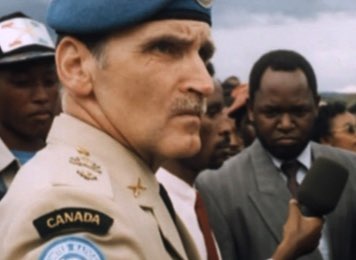
The Rules of Engagement (ROE) provided for UNAMIR significantly limited its ability to prevent atrocities. The ROE given to it was described as insufficient for the realities of the Rwandan situation as it only allowed peacekeepers to use armed force in self-defense. This rendered their presence in Rwanda as symbolic. Perpetrators committed heinous human rights violations with impunity, at times even in front of UN peacekeepers. This lack of clarity on the use of armed force was one of the most infamously reported shortcomings of the UN mission in Rwanda (Carlsson, Han & Kupolati, 1999).
Despite all the difficulties, UN peacekeepers
in were still able to save thousands of lives in areas under their control. However,
their efforts were not enough to overcome the crippling constraints that had
plagued the mission. The Rwandan Genocide, together with its Bosnian
counterpart in 1992, has since been used as an example of what can horrendously
result from an over-bureaucratized and disorganized UN peacekeeping system.
With the failure suffered in Rwanda, the UN has
since strived to make improvements in its peacekeeping missions. UN peacekeepers are now given a
clearer mandate authorizing the use of armed force to protect civilians, when
necessary. Communications between the different UN departments, as well as
information gathering have also significantly improved. Observer missions on
the field are now more capable of transmitting accurate information to the
Security Council and Secretariat. Recent successful missions by the UN are a
testament to the improvements. The UN mission in East Timor (now Timor-Leste)
is one good example of a properly-executed conflict intervention, coupled with
political and economic rehabilitation; the UN mission in Mozambique
demonstrated how UN support was able to help a key rebel party disarm and acquire
a political role.
III. Persistence of Old Constraints:
The Darfur Crisis and Its Contemporaries

Unfortunately, improvements made by UN peacekeeping
have been somewhat eclipsed by old constraints that would not go away. In 2003, the situation in Sudan
was very similar to Rwanda before the 1994 genocide began.The UN had already
maintained a presence in the country – the UN Mission in Sudan or UNMIS – to
oversee a peace agreement over a long standing civil war between North and
South Sudan. However, two militias from Sudan’s western province of Darfur, the
Sudan Liberation Movement (SLM) and Justice and Equality Movement (JEM), took
up arms against the ruling government. This conflict was due to years of racial
discrimination and ethnic hatred between Arab and non-Arab Sudanese, with the SLM
and JEM accusing the government of oppressing non-Arab Sudanese.
Succeeding
victories by the two militias revealed the weakness of government forces and
prompted Khartoum to implement a long-trusted strategy that involved the
mobilization of the Janjaweed, a Sudanese Arab militia, to help fight against
the rebels. The involvement of the Janjaweed precipitated a massive number of
human rights violations with rape, beatings, torture and massacres of civilians
widely reported.
By
2004, the peace and humanitarian situation in Darfur had deteriorated significantly.
Estimates of the death toll from the conflict have ranged from 126,000 to
400,000 (Weschler, 2010).The UN, in response, made an agreement with the
African Union (AU) to provide support for AU troops that will be deployed to
help mitigate the violence. This ultimately proved unsuccessful as the
atrocities worsened, despite the presence of AU forces. After a lengthy
discussion and other costly delays, the Security Council finally agreed to send
its own peacekeepers. A joint peacekeeping mission by the UN and AU was set in
motion with the deployment of the UN-AU Mission in Darfur or UNAMID in 2007.
Throughout
the conflict, numerous peace agreements between the rebels and the government
were signed, but never successfully implemented as violations were constantly
made by both sides. As of 2013, 1.4 million internally displaced people (IDPs)
still live in refugee camps. Many of these camps still lack necessary food and
other basic supplies (Laessing & Williams, 2013). A new ceasefire agreement
was signed by the Sudanese government, SLM and JEM. However, successful
implementation of this new agreement is still to be seen.
Closer analysis of the Darfur Crisis reveals
that the UN is still constrained by the same problems it had experienced in the
Rwandan Genocide. Furthermore, these problems have not only been limited to
Darfur, as they have also appeared in other UN peacekeeping efforts.

Critical oversights still constrain solutions. At the beginning of the violence in Darfur, a political settlement to resolve the long-standing civil war between North and South Sudan was in sight and the UN was reluctant to bring up another issue that could jeopardize the peace process (Weschler, 2010). Hence, the UN largely remained tentative of deploying another peacekeeping force in the region. This choice proved to be a repeat of what had happened in Rwanda as the UN again favored the ceasefire agreement between two predominantly warring factions, while choosing to remain blind on other developing atrocities in the same country. As a result, thousands of people were left to be massacred when immediate action should have been taken regarding the militias, especially the Janjaweed.
Just recently, a similar situation
happened in Côte d'Ivoire. The country was in the process of ending its civil
war by electing a new leader from three polarizing political figures. The UN mission
in Côte d'Ivoire pushed for a ‘winner-takes-all’ type of election, instead of a
transitional power-sharing arrangement in the hope that one winner could help
consolidate the country’s deep-seated socio-political differences. When the
results of the election came out, the winner did not receive the support of the
losing sides. Ultimately, political settlements failed and internal hostilities
resurfaced. Expert analysis revealed that if a power-sharing arrangement was
made, then all parties would have been given equal representation, lowering the
risk of backlash from disgruntled groups. Unfortunately, the international
community was not able to recognize this, and backed the wrong solution
(Mamdani, 2011).
Comprehensive analysis of any
conflict is critical before intervention. Darfur and Cote d’Ivoire revealed
that UN peacekeeping is still prone to major oversights. Political settlements
were prematurely declared as the solution for conflict, and deep-seated ethnic
and socio-political problems were largely ‘swept under the rug’. The Rwandan
genocide already gave an idea of what could happen when these problems are
neglected. It is evident that, until now, the UN still overlooks critical information on trends that
prevent national reconciliation.
Individual differences
and interests of Security Council members continue to delay resolutions. Despite condemning the atrocities
reported from Darfur, the Security Council was again initially reluctant to
deploy another peacekeeping mission in the region. Subsequently, individual
interests of influential Security Council members who did not support immediate
substantive action were put in the spotlight. Arab states like Pakistan and
Algeria, who were non-permanent members of the UN Security Council at the time,
tended to side with the Sudanese government, which is composed mainly of Arab
Sudanese. Russia, one of Sudan’s largest trading partners, has also shown strong
reluctance to implement tougher sanctions (Weschler, 2010). China, another
permanent UN Security Council member, has invested millions of dollars into its
oil program in Sudan. In turn, Khartoum has enjoyed strong diplomatic backing,
with China at times, threatening to veto UN resolutions if additional sanctions
were to be imposed on Sudan (Goodman, 2004; “China Blocks Efforts to Sanction
Sudan”, 2007).
Darfur is just one example of the many impasses
that develop within the Security Council. The long-standing Israeli-Palestinian conflict and the Syrian Uprising are
two other ongoing conflicts that demonstrate how political stalemates in the
Security Council can limit the UN’s capacity to act immediately. Up to now, the
debates and vetoes in New York continue while the peace and humanitarian
situations in places like Gaza and Aleppo further deteriorate. The longer the
Security Council remains paralyzed by individual biases, the more irrelevant UN
peacekeeping is starting to become.
UN missions still
lack personnel, supplies and equipment. A year after UNAMID’s establishment, it only had
9,000 out of the 26,000 mandated number of peacekeepers. It also lacked essential
logistics and equipment, especially helicopters. Efforts by Secretary-General
Ban Ki-moon to solicit vital units were met with little enthusiasm by many UN member-states.
Certain Security Council members who were the most capable of providing essential
military hardware were also reluctant to provide them (UN News Service, 2008).
Much
of the equipment that did manage to get to Sudan experienced additional
problems with customs due to incomplete documentation. Problems also with delivery,
internal control and accounting of supplies in UNAMID camps constantly added to
the confusion and delay in logistics (UN Office of Internal Oversight Services,
2010). UN personnel, in turn, had to wait for months to get adequate equipment
to start enforcing their mandate.
Other
UN missions have also been experiencing the same shortage. The UN secretariat
claimed that UN efforts are already overextended. UNAMID’s need for essential
equipment and personnel has to compete with other active peacekeeping missions like
that in Chad, Ethiopia, and Democratic Republic of Congo. In addition to this,
several important supporters of UN peacekeeping efforts can no longer sustain
their contributions. In 2010 for example, one country stopped providing
helicopters because its own air force needed them to respond to its own
internal problems. As a result, the UN mission in Congo, which desperately needed
helicopters for mobility in dense jungles, suffered greatly (Gowan, 2010).
As
of 2013, the UN has over 111,880 personnel actively engaged in 14 peacekeeping
missions around the globe (“Peacekeeping Fact Sheet”, 2013). Many of these missions
still lack the necessary personnel, equipment and supplies to fulfill their
mandate. With the lack of support from member-countries and increasing demands
for UN peacekeeping around the world, something has to give. If these problems
persist, then it looks as though UN peacekeeping capabilities will be the first
one.
Weapons still
proliferate among ordinary civilians and militias. The Sudanese government has
historically been reliant on militias to compensate for its weak and poorly
developed military. In the past, it has recklessly distributed thousands of
small arms to militias and tribes loyal to it. When the conflict in Darfur
began, many of these weapons were still in the hands of local Arab tribesmen
and militia. This was one major reason why so many civilians in Sudan possessed
weapons.
Furthermore,
two weeks after the uprisings in Darfur, government officers met with more
tribal leaders to encourage them to fight against the rebels and supply them
with weapons (Power, 2004). This proved to be a critical factor in making atrocities
in Darfur more rampant, as similar to the Rwandan genocide, many of the
perpetrators were civilians and militia.
In addition to this,
arms embargos are not strictly enforced. In 2005, the UN Security Council passed a resolution
banning the supply of arms to all parties in Darfur. However, according to
Amnesty International (2012) weapons sales from China and Russia continued to
flow into Sudan. Both countries initially denied the accusations (Blair, 2007; Pedersen,
2012). However, Beijing has since admitted that it continues to ship weapons
into Sudan, claiming that weapons sales were “minor” and did not end up in
Darfur (Human Rights First, n.d.). Additionally, Sudan’s neighboring country,
Chad, has also been accused of supplying weapons to rebel factions against the
government (Dietrich, 2008).
With around 875 million small arms
circulating worldwide, controlling their distribution and use is a very
difficult task (Australian Ministry of Foreign Affairs, 2012). The ubiquity of
small arms, lack of political will to enforce arms embargos, and propensity of
weapons to end up with non-state actors are making peacekeeping more
challenging. As weapons continue to proliferate, UN peacekeeping missions will likely
struggle to stay ahead, or even keep up with civilians and militia on the ground.
IV.
Conclusions

The UN’s failure in the Rwandan Genocide sent a clear message to the international community: An overly-bureaucratized and disorganized peacekeeping system will no longer suffice for the challenges of the post-Cold War period. The proximity of perpetrators to victims is so small that delays in intervention would automatically entail massive loss of lives in a short amount of time. The ubiquity of small arms among perpetrators makes this reality even more horrifying.
The problems that UNAMIR had experienced in 1994 have already served as warning signs for potential complications in peacekeeping efforts. Unfortunately, the UN has not been able to anticipate or prevent the recurrence of many of these problems. The Darfur Crisis and other recent conflicts are a testament to this fact. With the inability of the UN to remove many of the major constraints in its peacekeeping efforts, it will likely remain one step behind the constantly evolving hostilities that it is struggling to contain.
Given this predicament, it is essential for the UN to resolve its constraints as soon as possible. Member-states should fulfill their obligation in contributing personnel, supplies and equipment. More effort should also be done by all members to strictly enforce arms embargos. The UN should give strong emphasis on education, sustainable development and combating poverty so that less people would be encouraged to engage in violence. Comprehensive analysis of socio-political climate in conflict zones is essential so that the right objectives for each mission are established. Lastly, UN Security Council members should avoid putting their individual interests above the goals of peacekeeping missions. Putting these measures in place would be a good start in helping the UN prove that when it says "never again", it actually means it.

The problems that UNAMIR had experienced in 1994 have already served as warning signs for potential complications in peacekeeping efforts. Unfortunately, the UN has not been able to anticipate or prevent the recurrence of many of these problems. The Darfur Crisis and other recent conflicts are a testament to this fact. With the inability of the UN to remove many of the major constraints in its peacekeeping efforts, it will likely remain one step behind the constantly evolving hostilities that it is struggling to contain.
Given this predicament, it is essential for the UN to resolve its constraints as soon as possible. Member-states should fulfill their obligation in contributing personnel, supplies and equipment. More effort should also be done by all members to strictly enforce arms embargos. The UN should give strong emphasis on education, sustainable development and combating poverty so that less people would be encouraged to engage in violence. Comprehensive analysis of socio-political climate in conflict zones is essential so that the right objectives for each mission are established. Lastly, UN Security Council members should avoid putting their individual interests above the goals of peacekeeping missions. Putting these measures in place would be a good start in helping the UN prove that when it says "never again", it actually means it.

Reference List
Australian Ministry of Foreign
Affairs. (2012). Australia to lead push
for global arms trade treaty. Retrieved from: http://www.foreignminister.gov.au/releases/2012/bc_mr_120702.html
Bildt, C. (2011). Dag
Hammarskjöld and United Nations peacekeeping. UN Chronicle. Retrieved from: http://www.un.org/en/peacekeeping/documents/un_chronicle_carl_bildt_article.pdf
Black, I. (2012). Kofi Annan
resigns as Syria envoy. The Guardian.
Retrieved from:
http://www.guardian.co.uk/world/2012/aug/02/kofi-annan-resigns-syria-envoy
Blair, D. (2007). Russia and
China ‘break Darfur arms embargo’. The
Telegraph. Retrieved from:
http://www.telegraph.co.uk/news/worldnews/1551053/Russia-and-China-break-Darfur-arms-embargo.html
Carlsson, I., Han, S., &
Kupolati, R. (1999). Report of the
independent inquiry into the actions of the United Nations during the 1994
genocide in Rwanda. Retrieved from:
http://www.securitycouncilreport.org/atf/cf/%7B65BFCF9B-6D27-4E9C-8CD3-CF6E4FF96FF9%7D/POC%20S19991257.pdf
China blocks efforts to sanction
Sudan over Darfur crisis. (2007). Canwest
News Service. Retrieved from:
http://www.canada.com/topics/news/world/story.html?id=4bb2ff74-12a6-4a92-a3c4-2bf5c2ec1481
Dietrich, C. (2008). Darfur: Time
to uphold the arms embargo. Refugees
International. Retrieved from:
http://www.refintl.org/policy/field-report/darfur-time-uphold-arms-embargo
Doyle, M. (2004). Ex-Rwandan PM
reveals genocide planning. BBC News. Retrieved
from: http://news.bbc.co.uk/2/hi/africa/3572887.stm
Ghoniem, A., (2003). United
Nations Operations: Improvements for Mission Success. Standord University. Retrieved from:
http://www.stanford.edu/class/e297a/United%20Nations%20Peacekeeping%20Operations.pdf
Goodman, P. (2004). China invests
heavily in Sudan’s oil industry. The
Washington Post. Retrieved from:
http://www.washingtonpost.com/wp-dyn/articles/A21143-2004Dec22.html
Gowan, R. (2010). Will UN
Peacekeeping fall victim to budget cuts? The
Globalist. Retrieved from: http://www.theglobalist.com/storyid.aspx?StoryId=8708
Human Rights First. (n.d.) China’s arms sales to Sudan. Retrieved
from: http://www.humanrightsfirst.org/wp-content/uploads/pdf/080311-cah-arms-sales-fact-sheet.pdf
Laessing, U. & Williams, A.
(2013). Darfur fighting displaces more than 30,000 people: U.N. Reuters. Retrieved from:
http://www.reuters.com/article/2013/01/11/us-sudan-darfur-idUSBRE90A0K920130111
Mamdani, M. (2011). Ivory Coast:
A UN failure. Al Jazeera. Retrieved
from: file:///C:/Users/BOI/Desktop/Eisaku%20sato/Ivory%20Coast%20%20A%20UN%20failure%20-%20Gold%20-.htm
Peacekeeping Fact Sheet. (2013). United Nations Peacekeeping. Retrieved
from: http://www.un.org/en/peacekeeping/resources/statistics/factsheet.shtml
Pedersen, S. (2012). Recent
violence in Darfur reminder that conflict is not over. The International. Retrieved from:
http://www.theinternational.org/articles/228-recent-violence-in-darfur-reminder-that-c
Power, S. (2004). Dying in
Darfur: Can ethnic cleansing in Sudan be stopped? The New Yorker. Retrieved from:
http://www.newyorker.com/archive/2004/08/30/040830fa_fact1
Reeves, E. (2013). UNAMID
continues to prove powerless in the face of growing violence, with humanitarian
access and capacity at greatly increased risk. Sudan Tribune. Retrieved from:
http://www.sudantribune.com/spip.php?article45896
Rwanda – UNAMIR mandate. (n.d.)
Retrieved from: http://www.un.org/en/peacekeeping/missions/past/unamirM.htm
UN chief helped Rwanda killers
arm themselves. (2000). The Observer.
Retrieved from: http://www.guardian.co.uk/world/2000/sep/03/unitednations1
UN News Service (2008). Darfur peacekeeping force faces greatest
risks since the 1990s – top UN official. Retrieved from:
http://unamid.unmissions.org/Default.aspx?tabid=11025&ctl=Details&mid=14162&ItemID=16786&language=en-US
UN Office of Internal Oversight
Services. (2010). Audit Report: Logistic
operations in UNAMID. Retrieved from:
http://usun.state.gov/documents/organization/144952.pdf
United
Nations, Charter of the United
Nations, 24 October 1945, 1 UNTS XVI, available at:
http://www.unhcr.org/refworld/docid/3ae6b3930.html [Accessed 15 March
2013]
Weschler, J. (2010). UN Response to the Darfur Crisis. The
gap between narratives and practices, Darfur: The responses from the Arab
world. Retrieved from:
http://www.securitycouncilreport.org/atf/cf/%7B65BFCF9B-6D27-4E9C-8CD3-CF6E4FF96FF9%7D/UN_Responses_Darfur.pdf


No comments:
Post a Comment